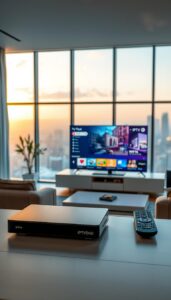

The way people consume television has fundamentally shifted over the past decade. Traditional cable and satellite packages, once the only way to access live TV and on-demand content, are rapidly losing ground to internet-based alternatives that offer more flexibility, more channels, and significantly lower costs. Among these alternatives, IPTV subscriptions have emerged as the most versatile and powerful option for cord-cutters who still want access to live sports, international programming, movies, and thousands of channels from around the globe. One of the most popular ways to enjoy this technology is to install iptv smarters pro on firestick, which transforms Amazon’s affordable streaming stick into a full-featured IPTV receiver. Meanwhile, the iptv smarters pro app has become the go-to player for millions of users worldwide thanks to its clean interface and robust feature set. Whether you are brand new to IPTV or looking to optimize your existing setup, this comprehensive guide will walk you through everything you need to understand about the technology, supported devices, streaming quality, troubleshooting, and the legal landscape surrounding these services.
Understanding IPTV Technology and How It Works
IPTV stands for Internet Protocol Television, which is a method of delivering television content over the internet rather than through traditional terrestrial, satellite, or cable formats. At its core, IPTV uses the same networking protocols that power websites, email, and video calls, but it applies them specifically to the delivery of live and on-demand video content. When you tune into a channel on an IPTV service, your device sends a request to a remote server, which then streams the video data back to you in real time using protocols like HTTP Live Streaming (HLS), Real-Time Streaming Protocol (RTSP), or MPEG-DASH.
What makes IPTV fundamentally different from traditional broadcasting is that content is delivered on a unicast basis in most consumer scenarios. This means each viewer receives their own individual stream, which allows for features that simply were not possible with old-school broadcasting. You can pause, rewind, and fast-forward live television. You can browse massive video-on-demand libraries that rival Netflix and Amazon Prime. You can access Electronic Program Guides (EPGs) that show detailed schedules for every channel, making it easy to plan your viewing or set catch-up recordings.
There are three primary types of IPTV content delivery. The first is live television, which mirrors the traditional broadcast experience — you tune into a channel and watch programming as it airs in real time. The second is time-shifted media, sometimes called catch-up TV, which allows you to watch previously aired content within a certain window, often 24 to 72 hours after the original broadcast. The third is video on demand (VOD), where you browse a library of movies and TV series and start watching whenever you choose, much like using a subscription streaming platform.
The infrastructure behind IPTV services typically involves content aggregation servers, middleware systems that manage user authentication and channel lineup delivery, and content delivery networks (CDNs) that distribute the actual video streams across multiple geographic locations. Higher-quality providers invest heavily in redundant server clusters and load balancing to minimize buffering and downtime, while budget providers may rely on fewer servers, leading to inconsistent performance during peak viewing hours. Understanding this backend architecture helps explain why not all IPTV providers deliver the same experience, even if they advertise similar channel counts.
Why IPTV Subscriptions Are Replacing Traditional Cable
The decline of traditional cable television is not a trend — it is a structural shift driven by economics, consumer preferences, and technological advancement. Cable subscriptions in North America alone have dropped by tens of millions over the past five years, and the trend is accelerating globally. The reasons are straightforward and compelling when you examine them closely.
Cost is the single biggest driver. A typical cable package in the United States runs between $80 and $200 per month depending on the number of channels, premium add-ons, and equipment rental fees. IPTV subscriptions, by contrast, commonly offer access to thousands of channels — including many of the same networks available through cable — for a fraction of that cost. Monthly plans from reputable IPTV providers often range from $10 to $25, with quarterly and annual plans bringing the effective monthly cost even lower. For families watching a broad mix of content including sports, movies, kids’ programming, and international channels, the savings can easily exceed $1,000 per year.
Flexibility is another major advantage. Cable contracts often lock subscribers into 12 or 24-month agreements with hefty early termination fees. Most IPTV services operate on a month-to-month basis, allowing users to subscribe, pause, or cancel at any time without penalty. This flexibility extends to device compatibility as well. While cable requires a proprietary set-top box rented from the provider, IPTV works on virtually any internet-connected device: smart TVs, smartphones, tablets, laptops, Android TV boxes, Fire TV Sticks, and even gaming consoles.
Channel variety is where IPTV truly separates itself from cable. A premium IPTV subscription might include 10,000 to 20,000 live channels sourced from dozens of countries, covering every major language and genre imaginable. Sports fans get access to channels from the UK, USA, Canada, Germany, Spain, and beyond, often including pay-per-view events at no additional cost. Movie enthusiasts can browse VOD libraries containing tens of thousands of titles, many available in full HD or 4K resolution. This breadth of content simply cannot be matched by any single cable provider, regardless of the package tier.
Supported Devices and How to Set Up Your IPTV Service
One of the greatest strengths of IPTV is its device-agnostic nature. Unlike cable television, which chains you to a specific box in a specific room, IPTV lets you watch on almost any screen you own. Understanding the full range of compatible devices and how to configure each one will help you get the most out of your subscription.
Amazon Fire TV Stick
The Amazon Fire TV Stick is arguably the most popular hardware for IPTV streaming, and for good reason. It is affordable, compact, well-supported by app developers, and powerful enough to handle HD and 4K streams without breaking a sweat. The Fire TV Stick 4K Max, in particular, offers excellent performance with its quad-core processor, Wi-Fi 6 support, and Dolby Vision compatibility. To get started with IPTV on this device, most users choose to install iptv smarters pro on firestick, which involves enabling the “Apps from Unknown Sources” setting under Developer Options, downloading the APK file through the Downloader app, and following the on-screen installation prompts. The entire process takes less than five minutes and opens up a world of live channels and VOD content.
Smart TVs
Most modern smart TVs from Samsung, LG, Sony, and other manufacturers can run IPTV apps either natively through their app stores or via sideloading. Samsung Tizen OS and LG webOS both support Smart IPTV and other compatible applications. Android-based smart TVs from Sony, TCL, Hisense, and others have direct access to the Google Play Store, where IPTV players are readily available. For TVs that do not support IPTV apps natively, connecting an external device like a Fire TV Stick or Android box provides an easy workaround.
Android TV Boxes and Smartphones
Dedicated Android TV boxes such as the NVIDIA Shield TV, Formuler Z series, and BuzzTV units are purpose-built for IPTV and media streaming. They offer powerful hardware, dedicated remote controls, and optimized software experiences. Smartphones and tablets running Android or iOS can also stream IPTV content through compatible apps, making it possible to watch your channels while commuting, traveling, or simply lounging in a different room of the house.
Computers and MAG Devices
Windows and macOS computers can access IPTV through apps like VLC Media Player, MyIPTV Player, or browser-based portals. MAG devices, manufactured by Infomir, are another popular choice, particularly in Europe. These set-top boxes use Stalker middleware to connect directly to IPTV server portals and deliver a streamlined, TV-like experience that many users find intuitive and reliable.
Exploring IPTV Players and the Role of IPTV Smarters Pro
Choosing the right IPTV player application is just as important as choosing a good IPTV provider, because the player determines your interface, feature access, and overall viewing experience. There are dozens of IPTV apps available across various platforms, but a few have risen to the top based on reliability, feature richness, and user satisfaction.
The iptv smarters pro app consistently ranks as the most popular choice among IPTV users, and the reasons are immediately apparent when you use it. The app supports multiple login methods including Xtream Codes API, M3U playlist URLs, and Stalker portal connections. Its interface organizes content cleanly into live TV, movies, series, and catch-up sections. The built-in EPG viewer displays programming schedules in a familiar grid format that anyone accustomed to cable will find comfortable. It also supports multi-screen viewing, parental controls, favorite channel lists, and external player integration.
TiviMate is another standout player, especially popular among Fire TV Stick and Android TV users. Its premium version offers a highly customizable EPG, multiple playlist support, recording capabilities, and a polished interface that many users prefer for its speed and responsiveness. The free version is functional but limited, with the full experience requiring a modest one-time or annual payment.
Other notable players include XCIPTV, OTT Navigator, IPTV Pro, and Perfect Player. Each has its own strengths — XCIPTV offers a clean and simple interface, OTT Navigator provides advanced playlist management features, and Perfect Player appeals to users who want a minimalist, no-frills experience. Experimenting with two or three different players is worthwhile because the same IPTV subscription can feel noticeably different depending on which app you use to access it.
For users who prefer a more managed experience, some IPTV providers offer their own branded apps or portals that come pre-configured with channel lineups and EPG data. These provider-specific apps reduce the setup friction significantly but may lack the customization options that standalone players offer.

Streaming Quality: HD, Full HD, 4K, and Anti-Freeze Technology
Streaming quality is a make-or-break factor for any IPTV experience. Nobody wants to sit down for a Premier League match or a new blockbuster movie only to endure constant buffering, pixelated video, or audio sync issues. Understanding the factors that influence streaming quality and the technologies designed to prevent problems will help you make better decisions about both your provider and your home network setup.
IPTV channels are typically available in several quality tiers. Standard definition (SD) channels stream at around 1 to 3 Mbps and are suitable for smaller screens or slower internet connections. High definition (HD) channels require 5 to 8 Mbps and deliver noticeably sharper picture quality. Full HD streams at 1080p resolution need 8 to 12 Mbps for smooth playback. 4K Ultra HD content, where available, demands 20 to 35 Mbps and provides stunning visual detail on compatible displays. Your internet connection speed, combined with the quality of your provider’s servers, determines which tier you can reliably stream.
Anti-freeze technology is a term used by many IPTV providers to describe a set of server-side and client-side optimizations designed to minimize or eliminate buffering. On the server side, this involves using geographically distributed content delivery networks, load balancing across multiple server nodes, and implementing adaptive bitrate streaming that automatically adjusts video quality based on your current bandwidth availability. On the client side, anti-freeze features may include larger pre-buffer settings, automatic server switching when a particular stream becomes congested, and codec optimization for efficient data handling.
From a practical standpoint, there are several things you can do at home to maximize your streaming quality. Using a wired Ethernet connection instead of Wi-Fi eliminates interference and provides consistent bandwidth. If Wi-Fi is your only option, positioning your router close to your streaming device and using the 5 GHz band rather than the more congested 2.4 GHz band will help significantly. Closing unnecessary background applications and ensuring no other device on your network is consuming excessive bandwidth during your viewing sessions also makes a measurable difference.
Some users also employ VPN services when streaming IPTV, either for privacy reasons or to avoid ISP throttling. While a VPN adds a small amount of latency, a high-quality VPN service with fast servers can actually improve streaming performance in cases where your internet service provider is deliberately throttling IPTV traffic. The key is choosing a VPN provider with servers optimized for streaming and located near your actual geographic location.
Multi-Device Streaming and Family Use
One of the standout features of many IPTV subscriptions is the ability to stream on multiple devices simultaneously. This is a genuine game-changer for households where different family members want to watch different content at the same time. Traditional cable solves this problem by placing a separate set-top box in each room, adding to the monthly equipment rental cost. IPTV achieves the same result far more efficiently.
Most IPTV providers offer plans that support one, two, or more simultaneous connections. A single-connection plan is ideal for individuals or couples who typically watch together. A two-connection plan suits small families or someone who wants to watch on a TV at home and a smartphone while traveling. Larger families or shared households often opt for plans with three or more connections, ensuring everyone can stream independently without conflicts.
The practical benefit extends beyond just numbers. Because IPTV works across different device types, one family member might be watching a football match on the living room TV via a Fire TV Stick, another could be streaming a cooking show on a tablet in the kitchen, and a third might be catching up on a drama series on their laptop in a bedroom. All of this happens simultaneously through a single IPTV subscription, using the same internet connection, with each viewer enjoying their own independent channel selection and playback controls.
Parental controls built into players like IPTV Smarters Pro add another layer of family-friendliness. Parents can lock specific channels or content categories behind a PIN code, ensuring younger viewers only access age-appropriate programming. Combined with the ability to create separate user profiles in some players, this makes IPTV a genuinely family-oriented entertainment solution.
Legal Considerations and Choosing a Reputable Provider
The legal landscape surrounding IPTV is nuanced and varies significantly depending on your country of residence. IPTV technology itself is completely legal — it is simply a method of delivering video content over the internet. Major legitimate services like Netflix, Hulu, and YouTube TV all use IPTV technology. The legal questions arise around specific providers and whether they have obtained proper licensing for the content they distribute.
Licensed IPTV services operate with official broadcasting rights and are fully legal in every jurisdiction. These include services from major telecom companies, established streaming platforms, and regional broadcasters who have transitioned to internet-based delivery. Using these services carries zero legal risk for the subscriber.
Unlicensed IPTV services, which often offer thousands of channels at very low prices, operate in a legal gray area. In many countries, accessing these services as a viewer falls into a murky zone where enforcement is primarily directed at the providers and resellers rather than end users. However, the legal situation is evolving, and some jurisdictions have begun pursuing actions against large-scale consumers as well. It is worth researching the specific laws in your country before subscribing to any service.
When evaluating providers, look for several quality indicators. Reliable providers offer trial periods or short-term subscriptions so you can test their service before committing. They provide responsive customer support through live chat, email, or ticket systems. Their channel lists are accurate and regularly updated, and their servers deliver consistent performance with minimal downtime. Reading community reviews on forums and social media groups dedicated to IPTV can provide genuine user perspectives that marketing materials will never reveal.
Conclusion
IPTV technology has matured into a legitimate and powerful alternative to traditional television, offering unmatched flexibility, massive content libraries, and significant cost savings for viewers worldwide. Whether you choose to install iptv smarters pro on firestick for your living room setup, use the iptv smarters pro app on your smartphone for on-the-go viewing, or configure a dedicated Android TV box for the ultimate home theater experience, the possibilities are vast and genuinely exciting. The key to a great IPTV experience lies in choosing a reputable provider with stable servers, selecting the right player app for your preferences, and optimizing your home network for smooth streaming. As internet speeds continue to increase and IPTV technology continues to evolve with better anti-freeze solutions, higher resolution streams, and smarter EPG systems, the gap between IPTV and traditional cable will only continue to widen in favor of internet-based television.
Frequently Asked Questions
What internet speed do I need for IPTV streaming?
For a smooth IPTV experience, the minimum recommended internet speed is around 10 Mbps for standard and HD channels. If you plan to watch Full HD content at 1080p resolution, a connection of at least 15 to 20 Mbps is advisable. For 4K Ultra HD streams, you should have 35 Mbps or more available. Keep in mind that these figures represent the bandwidth needed per stream, so if multiple people in your household are streaming simultaneously or using the internet for other activities, your total connection speed needs to be proportionally higher. A wired Ethernet connection is always preferred over Wi-Fi for the most stable and buffer-free experience.
Can I use IPTV on more than one device at the same time?
Yes, most IPTV providers offer subscription plans that support multiple simultaneous connections. The exact number depends on the plan you choose — common options include one, two, three, or even five concurrent streams. This means different family members can watch different channels on different devices at the same time without interrupting each other. When subscribing, make sure to select a plan that matches the number of screens your household typically uses simultaneously to avoid connection conflicts.
Is IPTV legal to use?
IPTV technology itself is entirely legal and is used by major platforms like Netflix, YouTube TV, and Hulu. The legality question depends on whether the specific IPTV provider you are using has obtained proper licensing for the content it distributes. Licensed and officially sanctioned services are completely legal everywhere. Unlicensed services occupy a legal gray area that varies by country, with enforcement generally focused on providers and distributors rather than individual viewers. It is always wise to research the regulations in your specific jurisdiction and consider using services that operate transparently.
What is the best IPTV player app for beginners?
For beginners, IPTV Smarters Pro is widely considered the best starting point due to its intuitive interface, straightforward setup process, and support for multiple connection methods including Xtream Codes API and M3U playlists. It organizes content into clearly labeled sections for live TV, movies, and series, and includes a built-in EPG guide that makes channel surfing easy. TiviMate is another excellent option, particularly for users on Android TV or Fire TV Stick devices who want more customization and a premium feel. Both apps are well-documented with plenty of setup tutorials available online.
How do I fix buffering issues with IPTV?
Buffering is the most common frustration among IPTV users, but it can usually be resolved through a combination of steps. First, test your internet speed to confirm you have sufficient bandwidth for the stream quality you are trying to watch. Second, switch from Wi-Fi to a wired Ethernet connection if possible, or at minimum move your router closer to your streaming device and use the 5 GHz Wi-Fi band. Third, try switching to a different channel quality option within your IPTV player, as some providers offer the same channel in multiple resolutions. Fourth, clear the cache of your IPTV app and restart your streaming device. Finally, consider using a VPN service to bypass potential ISP throttling, which some internet providers apply specifically to streaming traffic during peak hours.